
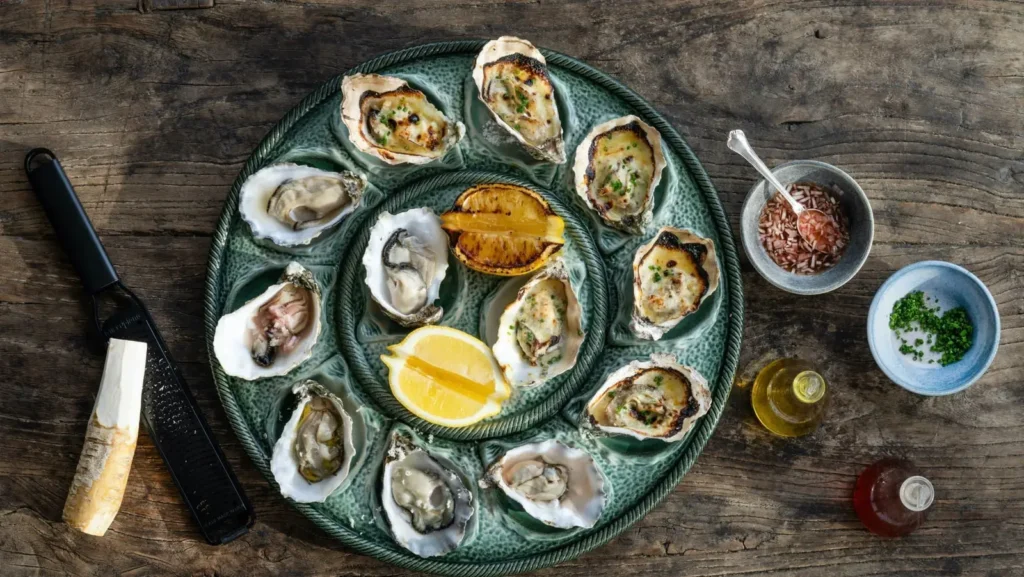
Two ways to meet the same food
If you are new to oysters, the first question is simple: raw or cooked? There is no single answer. The two offer different experiences, and the choice comes down to your palate, the preparation and your curiosity.
A raw oyster is prized for keeping its original texture and flavor. Heat changes the texture and can add new layers of flavor, depending on what goes with it. Instead of treating it as a contest, think of them as two ways to get to know one product.
What to expect from a raw oyster
A raw oyster is soft and juicy, with a taste that can recall the sea. What you notice varies with the species, how and where it was grown, and the time of year. Your first one does not need a big portion or a complicated pairing. Look at it, smell it, try a small bite and pay attention. Lemon is a popular match, but too much can overpower the delicate flavor.
One important point: “fresh” does not automatically mean “safe to eat raw.” Raw oysters can carry microorganisms that cause illness, and looks or smell are not enough to tell. Brazil’s Ministry of Health recommends cooking seafood thoroughly to reduce the risk of foodborne infection. [1] The same advice is common in the United States, where health agencies warn that people with certain conditions, including liver disease or a weakened immune system, should avoid raw shellfish.
What changes when it is cooked
With heat, an oyster changes in texture, moisture and flavor. Results depend on the method: steamed, baked or grilled over embers, among others. Seasonings, herbs and sauces also shape the result.
If you are not used to the texture of a raw oyster, a cooked one can be a good way in. The heat changes the consistency, and the toppings let you explore more familiar combinations. Neither is better; they are different food experiences. In a tasting, trying both helps you notice the differences without turning dinner into an exam.
Pairing with drinks and sides
The side should flatter the oyster, not hide it. Lemon, fresh herbs and light sauces work well in balance. Baked or gratin styles can handle stronger toppings. Crisp, fresh drinks are often chosen for oysters, including dry sparkling wine, but it depends on how it is prepared and on your taste. Try small portions of different styles and compare. Food gets more interesting when curiosity comes before the idea that there is one right way to eat.
Safety is part of the experience
A tasting should start with where the oysters come from and how they are handled. Oysters are filter feeders and can accumulate microorganisms from the water, so controlled origin, proper storage, hygiene and preparation matter. Eating raw does not remove every risk, even when the oysters were chilled or frozen. People at higher risk should follow health guidance and avoid raw shellfish. Cooking thoroughly is the safest choice. [1][2]
Tasting is also knowing where it comes from
An oyster is more than an ingredient. Farming it takes skilled work, environmental monitoring and a supply chain that links the sea to the table. At Ostra Xperience, in Ribeirão da Ilha, the tasting comes with a talk about the farming and local production. It is a way to try different preparations and learn about Santa Catarina oysters at the same time.
Sources and references
- Brazil Ministry of Health. Foods with raw or undercooked seafood can pose a health risk. Read the official guidance.
- Integrated Group for Aquaculture and Environmental Studies (GIA). Food safety for oyster consumers. Read the technical material.
- Suplicy, Felipe Matarazzo (ed.). Manual do cultivo de ostras. Florianópolis: Epagri, 2022. See the reference.